Friday, July 29, 2016

Once a Cottage Now a Castle


Nineteen years ago I had my first glimpse of a more than unique Colorado attraction. One reason it's different is because it's very inexpensive. The owners just ask for a donation. I remember thinking, "What the heck is this place?" My family played around and marveled at the architecture and mountain views and left.
July 1997 
But it took a few years and a little research to discover the story behind this amazing castle in the mountains. Fifteen year old Jim Bishop saved money from delivering newspapers and mowing lawns to purchase a couple of acres near San Isabel National Forest. Jim also worked at his father's Pueblo business, Bishop Ornamental Iron Shop.
My sons on the third level in 1997

This castle began as a one room cottage for Jim and his wife. He started building in 1969 and is still working on it.
We made it.
You will find a scenic drive on the short trek from Pueblo, Colorado via I-25 to 165. I'm glad I got to go back in 2010 with my sister, brother, brother-in-law and sons.
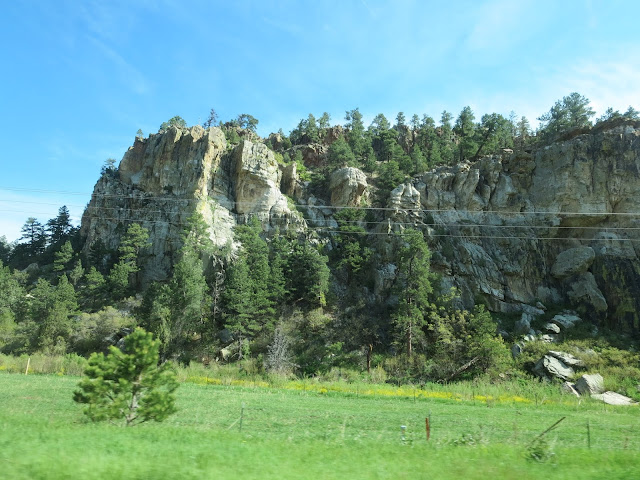
View from the road.
Jim encountered more than a few set backs in his venture. As word got about his building, the government looked into the fact he used rocks from the nearby national forest. They tried to charge him for the rocks.
My brother on the third floor.

Jim also lost a son on the property when a tree they were trying to remove fell on him. He was quoted as saying he kept working through his tears.
View from the third floor.
He also got smacked in the face when the Colorado State tourism department refused to include his castle in their brochures. Luckily, over time that changed. It's not surprising, though that Jim Bishop has some different views about the government and isn't shy about expressing them. If you go when he's around, don't be surprised if you receive an earful.
Sign at the castle
 Even though Jim likes to express his views, it's worth a trip to see something so unique. And I'm not the only one who thinks Bishop's Castle is one of a kind. Last year a rare form of cancer struck Jim Bishop and he signed over the deed to the castle to a friend or a con artist depending on who's telling the story. This guy started making plans to add security to the castle and change a lot more than just the name. Never fear, the Bishops were able to get back their castle and Jim is doing better.
Some people are brave enough to get on the metal bridge. I'm not one of them.
So if you are looking for something out of the ordinary to do in Colorado. I'd definitely recommend taking some time to marvel at Bishop's Castle.
My brother chatting with Jim Bishop.
Thanks for reading this. I hope I was able to do the castle justice.

Resources:.http://www.westword.com/news/renowned-roadside-attraction-bishop-castle-under-siege-in-southern-colorado-7090379

http://www.koaa.com/story/28895416/bishop-castle-gets-a-new-owner

Thursday, July 14, 2016

A Little Chapel in the Mountains


Driving into Colorado from Missouri I'm always on the lookout for Pikes Peak. It's the first mountain landmark I can easily distinguish. After that I look southwest for the Spanish Peaks. They are super easy to spot. Look for two mountain tops real close to each other. The Ute Indians who first inhabited this area called them "Wahatoya" which means "Breasts of the Earth". Look below and you'll see why it's a fitting name.

Spanish Peaks
So why do I care about the "Breasts of the Earth"? I guess it's because every time Mom and I travel to Colorado she's looking for the Spanish Peaks. So in turn I do the same. I know I've been there before. There are photos to prove it. But until fairly recently I couldn't remember visiting these mountains.
My parents were married at Cuchara Chapel 43 years ago.

Mom's not the only one who looks for the Spanish Peaks. They've been used by Spanish explorers for hundreds of years to find routes to the interior of Colorado.  According to legends the first Europeans into the area were Spanish militia and some priests looking for gold. They found a vein of gold and enslaved native Indians to dig up the gold. Once they had the gold, they killed the Indians and headed south to Cuchara Pass. Somewhere near the river banks they were ambushed by Indians and killed. I'm going to assume for retribution.
River at Cuchara

The first recorded exploration of the Spanish Peaks comes from 1706. This is 100 years before Zebulon Pike discovered Pikes Peak. Militia from Santa Fe came up to put an end to the Comanche raids. It took some time, but they finally killed Green Horn a great Comanche war chief. In the 1820s the Spanish Peaks provided direction for travelers on the Santa Fe trail.
Entering Cuchara
Nestled in the Spanish Peaks is Cuchara. This is where my mom was married. This town wasn't always called Cuchara, though. It used to be called Nunda Valley. Nunda is an Indian word for potato. The first Anglos came to the valley because land was free as long as they built a house with a real door and window. These Anglos followed in the ways of the Indians and planted potatoes in the meadows. By the end of the 1800s the valley was referred to a Cuchara.
Returning to the chapel in 2013
The word Cuchara is Spanish for spoon. There are two different reasons for the name. One legend says that early explorers found spoons along the river. Unless spoons have a different meaning, I'm not inclined to believe that story. The second story claims it's named spoon after the spoon shape of the valley itself. This sounds a little more plausible to me.
A few years ago, Mom got her wish and my brother and I accompanied her to Cuchara. The air was cool and crisp on this July morning and the chapel area was quiet.
Mom took this photo of us.
After visiting the chapel we visited the shops in town. By then there were more people roaming around and shopping.
Love the sign and flowers
In 1908 George Mayes and his wife moved to Cuchara valley for the health benefits. Once he laid eyes on the the valley, he decided it would be a great place for a summer resort. By 1910 there were several cabins in Cuchara and it became a real community.
One of the Cuchara cabins
I love mountain wildflowers!
The Spanish Peaks are also home to a neat geologic feature that's commonly known as Devil's Backbone. They are actually the eroded remains of dikes. Dikes are created when magma tunnels through existing rock. Over time the surrounding rock eroded leaving the igneous rock exposed.
Devil's backbone 
One of my favorite photos has trees growing out of a rock on Devil's Backbone.
So cool!
The only thing left to do is bring my sister to Cuchara someday. I'm glad I'll have another opportunity to visit this town again. Do you know any special Colorado towns? Share them with me. I'd love to find more small mountain towns to visit.

Resources: http://www.lavetarealty.com/area-info/history-and-legends/
                  http://lavetacucharachamber.com/visitor-info/area-history/

Saturday, July 9, 2016

Town of Many Names

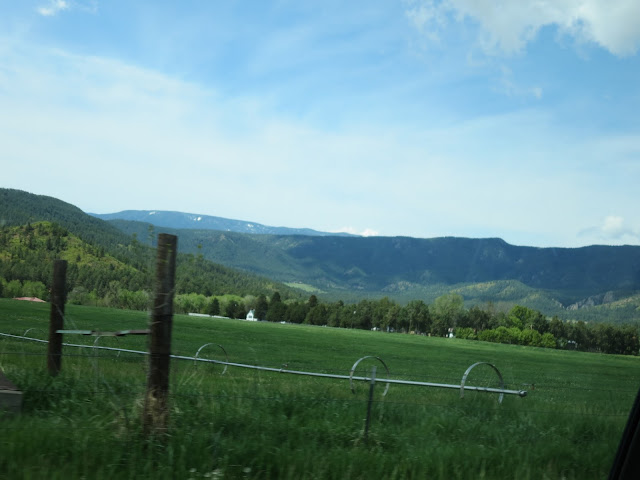
A gorgeous valley


What do outlaws, soldiers, native americans and pine trees have in common?
You shall soon find out.

For years my grandma, mom and aunt would talk about visiting this place in Colorado. I can't recall ever going until 2016. I'd hear them talk about "It's so peaceful." "We had a lovely time." But I couldn't appreciate this beautiful valley until I visited myself.

The lush valley hugging the Wet Mountains was well known by several Native American tribes before any fur traders laid eyes on it.
The sound of rushing water
By 1834 the valley was discovered by Robert Fisher. Robert was born in 1807 in Virginia and came west to become a trader, hunter and guide. He named the valley "Fisher's Hole". The name stuck for almost 30 years. 
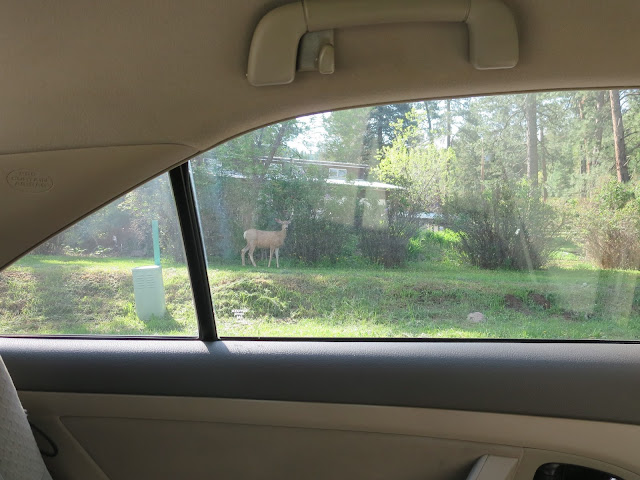
I don't know about hunting, but wildlife still remains here.
In 1859 Fisher's Hole was taken over by a Mexican bandit, Juan Mace. Mace used the valley to hide his stolen livestock. And he was very clever about it. Mace used lookouts in the mountains to warn when trespassers were coming so he would have time to hide his loot. The new name of the valley became Mace's Hole. By this time there were a few settlers in the valley and they didn't care for Mace and his bandits. The last straw came when Mace started robbing his valley neighbors. The local settlers got together and created a trap for Mace and his posse. The trap netted 8 bandits and they were immediately hung and Mace's hideout was burnt to the ground. Although 4 bandits remained at large, they never resurfaced in Mace's Hole again. No one is sure whether Mace was killed or not, but at least he wasn't terrorizing the locals anymore.
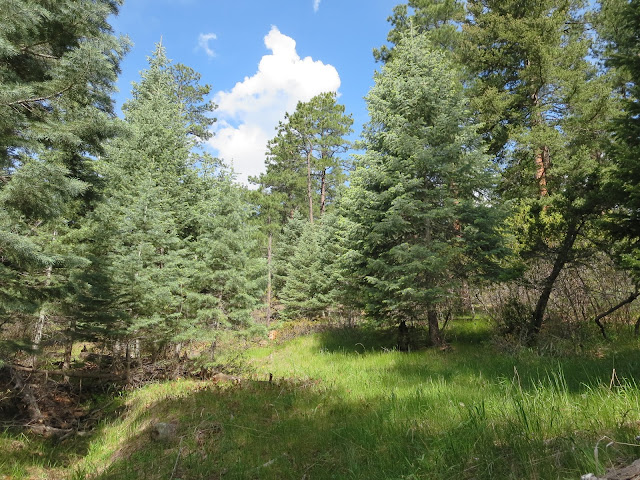
Pine trees make amazing hiding places.
During the Civil War Southern commander John Heffinger was gathering troops in the mountains southwest of Pueblo. It's rumored they were meeting at Mace's Hole. Based on its prior history, it doesn't seem far fetched. 
Just a little piece of current Main Street.

In 1871 the first schoolhouse was built; along with the one room school came a local church. In 1873 Mace's Hole gained a post office. Main street was lined with a few stores and small businesses. Before long Colorado would become an official state in the United States of America. When this happened in 1876 locals of Mace's Hole decided that the name of their home should be fitting of the area, not named after a thief. On October 25, 1876 they officially named their establishment "Beulah".
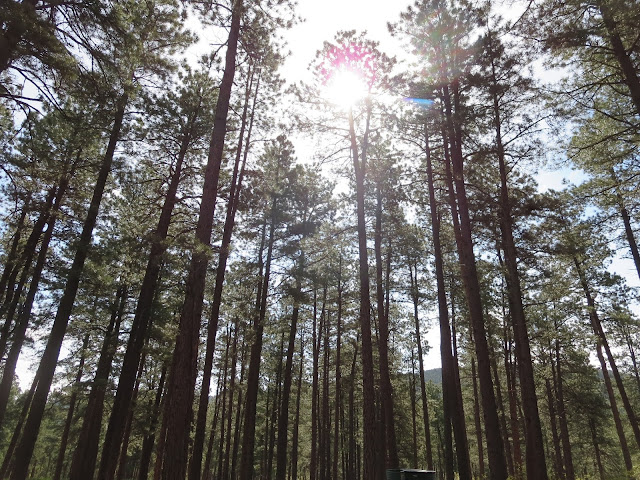
Morning sun streaming through the trees.
Today Beulah is an unincorporated community, but that doesn't detract from the rich history. It also doesn't encompass the beautiful views and peaceful, relaxing memories that can be made there. 
Now I think I get why my family always made such a big deal about going out to Beulah. You can spend an hour or spend a few days there, but the lush surroundings and quiet times will stay with you forever. 
There aren't enough photos to show the tremendous views.
Let me know what you think of this not so official town.

Sources:  http://pueblopulp.com/quiet-little-place-beulah-colorado
               http://www.genealogy.com/forum/surnames/topics/mace/1053/
              http://members.tripod.com/mr_sedivy/colorado16.html
              http://www.chieftain.com/mobile/mneighbors/4168188-123/beulah-mace-pueblo-hole
             http://bootsfamily.8m.com/murray8beulah.html

#southerncolorado #history #maceshole #getaway #BeulahColorado

Thursday, April 30, 2015

What's up with Pueblo?

 I have just returned from a quick spring trip to Pueblo. And as I fell asleep last night I considered that maybe I have some kind of idealized version of Pueblo in my mind and when I'm home that's all I accept. This blog is my way of reconciling myself to Pueblo, Colorado's reality.
Just a portion of Jackson Park
A good source of information is my brother. He lives near Jackson Park and knows just about everyone who walks down the sidewalk. I have to admit my ignorance in his presence. I saw a man walking around the park with his dog unleashed. David, my brother, knows exactly who it is. This man lives down on Union Street and comes to the park and picks up trash. I saw him do it.

Now Pueblo has some nice parks and big parks. Jackson park is small, but people leave trash. I find this odd. The parks department provides receptacles for trash; so why won't people use them? I have no logical answer. My Grandma and Mom were big anti litterers! I grew up with the famous commercial that ended with the Native American shedding a tear over the trash. I don't understand leaving trash behind for others to see. It ruins a great park.
Me and my brother's dog behind the Jackson Park sign
My family has spent some fun time playing croquet in Jackson Park. I didn't see any litter then, but well, I was there to have some fun. That's why the city spends money on the parks; they want people to enjoy them. Kids and adults can't enjoy them if they are messy. The parks department can't mow them if they are messy. And it's helpful in croquet to have the grass mowed.

There are also lots of people walking along the sidewalks with backpacks. My naivety surfaced once again. Why are these people carrying backpacks? They don't look like they are on the way to school, especially since it's during school hours. I'm pretty sure my brother told me a couple of them live by the river. Well thanks, that tells me a lot. Now I picture a hobo camp set up by the river. NO WAY! I think to myself. I'm pretty sure he told me later, that they have a real place to stay, but the image remained. Are there homeless in Pueblo? Do they have camps under bridges? I grew up in a nurturing family in Pueblo. I can't imagine being there without a home. Sadly, it may be the case according to a Pueblo Chieftain article from January 2014. You can find it here. http://www.chieftain.com/news/breaking/2168858-120/marijuana-chieftain-homeless-mertz

In all truthfulness there are no marijuana distributors in the city limits of Pueblo. A person would have to go to the county to buy weed, just like I've been to the county to buy fresh produce. Gee, I'm bummed. I hope the rest of the states take a long, sober look at Colorado before deciding to legalize marijuana. It's been a different blog. I started with littering and ended with pot. I'd love to hear your opinion. Until next time...

Thursday, April 23, 2015

A Rose is a Rose, unless it's Rosemount

Front of Rosemount Museum
For $6.00 I can visit a Pueblo landmark with ghosts, history and who knows what else. What a bargain! I can't believe I've never taken the time to visit this historic mansion. I've drove by it many times heading to Parkview Hospital. I've stopped to take some photos, because it looks cool, But never have I stopped and spent some time viewing the grounds. That lackadaisical attitude must change. The Rosemount Museum boasts 37 rooms that was completed  in 1893.
Side view of Rosemount

This house was built for John and Margaret Thatcher. John was a school teacher turned general store owner in Pueblo. John and a brother opened the First National Bank of Pueblo in 1871. Margaret was also a school teacher. She quit when she got married. I'm glad I didn't do that, but I suppose it was common in 1866. She had her say in the construction of Rosemount.
I've heard from some sources that there's no photography allowed in the museum. I will verify that later. There are reports of benign ghosts at the Rosemount. I'll report my findings as soon as I'm able. I'm excited to see some more history of Pueblo and maybe I'll be scared, too. Now if only I can convince my brother to go with me... Suggestions would be appreciated. Until next time.

Friday, April 17, 2015

I'm Tripping

Mesa Junction view from Rawlings Library
So, I have the opportunity to visit my hometown this spring. The question is, what do I do? Should I visit the historic Colorado Fuel & Iron company where my great-grandfather worked? Should I visit some of the districts that were once towns that formed Pueblo? I have no specific agenda. Well, I do want to visit Walter's Brewery taproom. But aside from that, I'm open to suggestions.

I've been to El Pueblo History Museum. It's on the site of the former fort. I've been to the Pueblo Medal of Honor Memorial. That was cool. I've walked HARP, that's Historic Arkansas River Project. It's a neat trail in the middle of town. I loved it; although some people don't seem to care for it. That's just something I've heard from a couple folks.

Actually taking some time to visit the Rosemount Museum would be new. I've been by the place on 14th Street several times, but I can't remember going inside. It's an old house, I mean castle,  turned museum. The Thatchers used to live there. The Thatcher family plays a prominent part of Pueblos' history going back to 1863.

I've danced outside the Sangre de Cristo Arts Center in Pueblo. This was last summer with my brother's friend, Big Robert. But I've never been inside except to use the restroom. I've never just visited the galleries or whatever they have on display at the arts center.

So what do you think? What ideas do you have for my next visit to Pueblo? I'm ready to read some comments. Post them below. You can be anonymous, if you like. I'll consider all suggestions. #Pueblo

Tuesday, April 14, 2015

Drinking It In

Right above the levee of the Arkansas River from the Union street bridge sits Union Depot. I find this area interesting. This might be due to the fact I explore this area annually on foot. But it may just be because they are a unique piece of history. Technically this area is called Union Avenue Historic District.
Union Depot July 2014 (View from the Union Street bridge)

The Union Station or Depot, as the owners  like to call it, was completed in 1890. It was erected to support 5 different railroad companies. The first train came through Pueblo in 1872. Eventually it became a union for 5 different railroad companies. I'm sure that's how the name was created. You can still see trains going by, I don't believe any stop now. Currently they have retail offices and apartments. The Pueblo Union Depot is actually located on B Street. Right now the concrete paintings are mostly gone. They had to be destroyed to fix the levee. I was sad to see them gone.
The Patriot Train behind Union Depot
I honestly took this photo because it looked like it was smiling at me. Look carefully at the white part. Later when I toured the History Museum nearby, I found out this train had a name. There are several old trains behind the depot. It's worth a visit if you are in the area.


Walter Brewery wagon outside Union Depot

Walter Brewing Company started brewing in Pueblo in 1889. The company was started by a German  with the surname Walter. It continued with a short break for prohibition through the mid 1970s. Although I just heard about it, Walter's beer has been revived in Pueblo. You can find their tap room at 126 Oneida Street. And you can bet I'm going next time I'm in town. You can find more information here: http://www.waltersbeer.com/


As it turns out, I have a couple Walter's memorabilia. Above is an ashtray from my grandparents.


This is a Walter's tray, also from my grandparents. So that's why I ended up taking a photo of the cart in front of Union Depot. Something about Walter's seemed familiar. And I know that seems like a stretch, mainly because my grandpa used to be a liquor salesman. When I was old enough he let me file his invoices. He used to give us all kinds of neat liquor t-shirts. I'm not sure what my mother thought, but she did let us wear them.

Well, I can't say exactly how I went from Union Depot to Walter's Brewery to my grandparents. I can say that I have a lot of memories from Pueblo. I remember some of when I lived there, but many fond memories come from the visits. I hope I'm still able to visit as the years go by. Until the next post... #Pueblo